
OBD Key Programming Theft: What It Is and How to Stop It
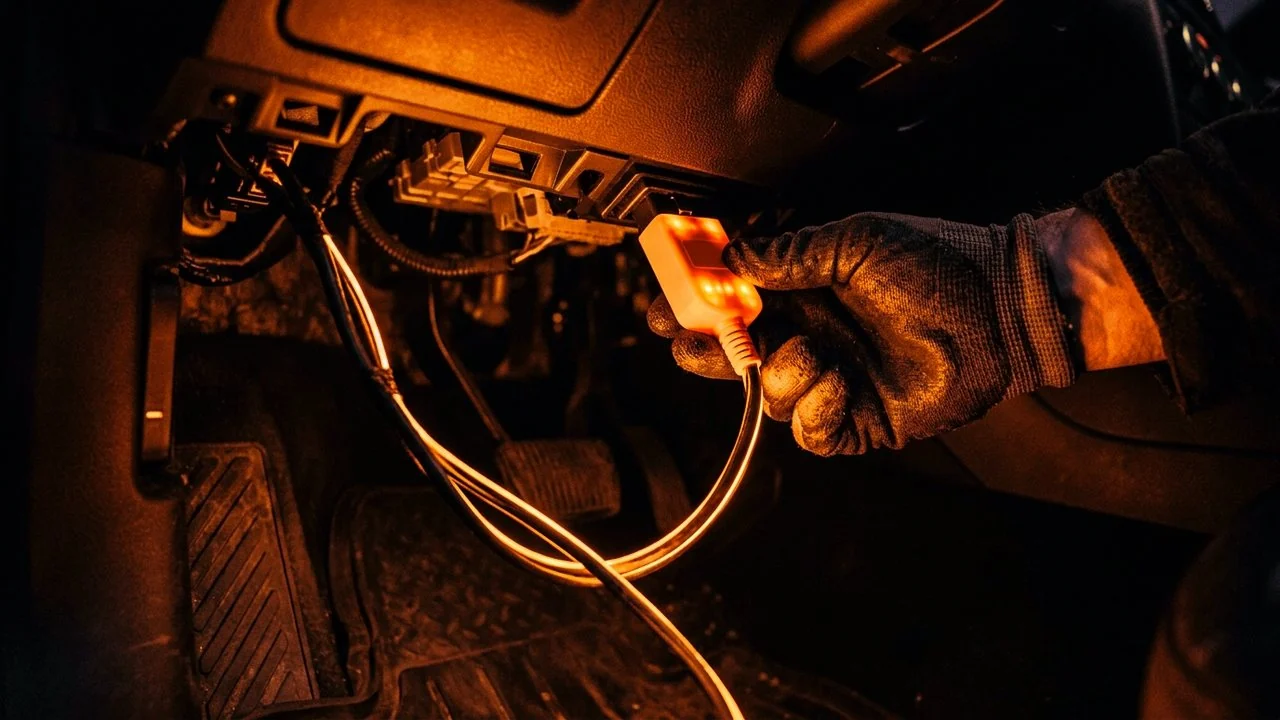
Most people have heard of relay attacks, where thieves boost the signal from a keyless fob inside the house. Key programming theft is different. The thief doesn't need your key at all. They get into the car, connect to its diagnostic port, and teach the car to accept a brand-new key they brought with them.
What is the OBD port?
Every modern car has an on-board diagnostics (OBD) socket, usually under the dashboard near the driver's knees. Garages use it to read fault codes and, when you lose a key, to program a replacement. That's a genuine, useful feature. The problem is that the same access can be abused.
How key programming theft happens
In broad terms, a thief gets into the car, often quietly and without setting off the alarm, reaches the diagnostic port and uses equipment to add a key of their own. To the car, that new key is genuine. It starts, and they drive away. The whole thing can be over in minutes, and there's no damaged ignition barrel to give it away.
Why the factory immobiliser doesn't stop it
The factory immobiliser does exactly what it was designed to do: it lets the car start for any key the car recognises. Once a thief's key has been added, the car recognises it. Nothing about the attack looks wrong from the car's point of view.
What actually helps
- A second, independent immobiliser. The most effective step is one the car's own key system can't switch off. If the car won't start without something the thief doesn't have, a new key on its own is useless.
- Hide where it's fitted. An aftermarket immobiliser that's professionally fitted out of sight is far harder to find and bypass in the time a thief has.
- A physical deterrent. A visible steering wheel lock tells a thief your car will take longer than the one next to it.
- Park smart. Off-road, in view, in good light and close to a camera where you can.
- Keep your keys accounted for. If a key goes missing, have the car's keys reset by a reputable specialist.
How IMMOSTOP helps
IMMOSTOP adds two immobilisation points that are completely separate from the car's own key system. The car only starts when IMMOSTOP recognises your phone or your keyring tag, so a newly programmed key starts nothing. Every board has its own unique key, it locks to its owner once paired, and it's professionally fitted out of sight.
Two independent cut points the car's key system can't override. See IMMOSTOP, £349 all-in, fitted →
More on vehicle security
- What is a relay attack, and how do you stop it?
- What makes a good car immobiliser?
- How IMMOSTOP keeps your car secure
- Compare IMMOSTOP vs trackers, steering locks & aftermarket immobilisers
- Order IMMOSTOP (£349 all-in, fitted)
- Car immobiliser fitting in your area
- Autosecureshop — vehicle security specialists